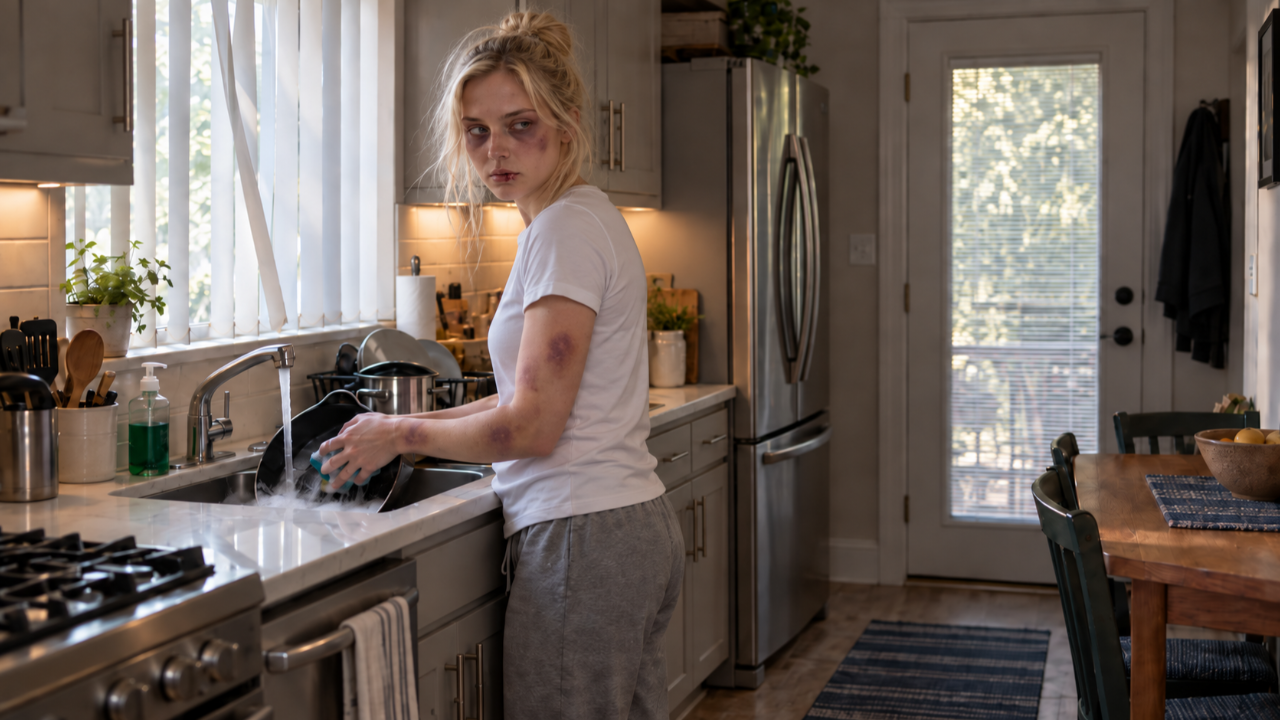
She got out. The door closed behind her, the house was somewhere else, and for the first time in years, Roy was not standing between her and every decision she made. No one was watching how long she stood at the refrigerator. No one was deciding whether she could leave, what she could wear, who she could speak to, or whether the answer she gave was the right one.
So why didn’t freedom feel like freedom?
That was the part of the escape story people rarely talked about. Movies liked the moment when the woman walked away. Maybe someone waited for her in a car. Maybe the music swelled. Maybe she looked back once and then faced forward as though the hardest part was behind her.
Real life kept going after the credits.
There was a first night somewhere unfamiliar, when every sound seemed too loud. A first morning when she woke and had to remember where she was. A car door slammed outside, and her body reacted before her mind could tell her she was safe. Someone asked what she wanted for dinner, and instead of answering, she tried to figure out which response would cause the least trouble.
Then she remembered there was no punishment coming.
At least, she was supposed to remember that.
The problem was that her body did not believe it yet.
In my novel Passing Through Sorrow, Bailey Simmons got out. But getting out was never going to be the end of her story, because leaving an abusive relationship did not instantly return everything that had been taken from her. In some ways, the first days and weeks could feel even more frightening than the life she had escaped. With Roy, the danger was terrible, but it was familiar. She knew the rules. She knew what anger looked like before it exploded. She knew which words were safe and which ones were not.
Outside that house, the rules were gone.
So was the terrible predictability that had helped her survive.
Safety could feel strangely dangerous when your body had spent years learning that danger was the only thing you could count on.
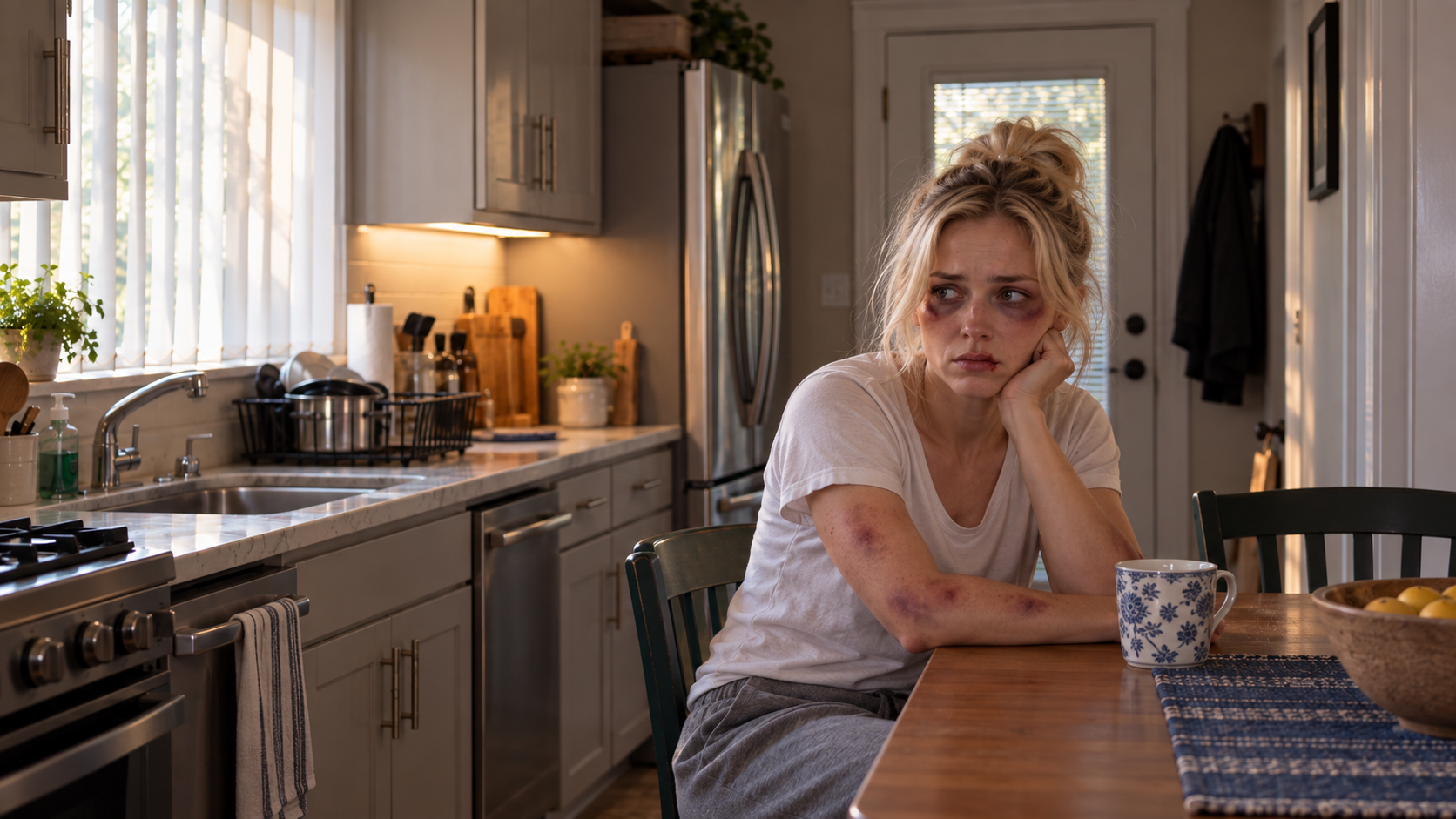
The Cage Didn’t Disappear When the Door Opened
Abuse changed the way a person moved through the world. For years, Bailey had learned to notice everything around her. A shift in Roy’s voice mattered. The way he entered the room mattered. The length of a silence, the expression on his face, the placement of an object, the sound of his footsteps—anything could become information she needed in order to stay safe.
Those habits did not vanish because she crossed a property line. Her body had learned the rules even when her mind knew she was somewhere safe. The danger could end, but the preparation for it might continue long afterward.
That was why freedom could feel so unreal at first.
A woman might still rehearse conversations before speaking. She could apologize before anyone accused her of anything. Someone might ask what she wanted, and the question itself could feel overwhelming because she had spent years learning that her wants did not matter. She might check the window every time a car slowed down outside or wake in the night convinced she heard his footsteps.
Safety could make her more nervous instead of less.
Inside the abuse, she had known where the threat was.
Outside it, she might feel as if the threat could come from anywhere.
Roy had spent six years training Bailey to expect him. Even after she escaped, part of her was still waiting for him to walk through the door and prove that freedom had only been temporary.
That did not mean she wanted him back. It meant she had survived by adapting to him.
Six years of abuse took Bailey’s identity piece by piece. Getting it back was never going to happen in one dramatic moment. Rebuilding happened much the same way the damage had happened—slowly, unevenly, one piece at a time. Only now, every piece belonged to her.
The People Beside Her Couldn’t Do the Healing for Her
Bailey’s road back included other people, and that mattered. There were people who saw her differently than Roy had taught her to see herself. People who were willing to remain close without demanding anything from her. People who understood that helping someone heal did not mean taking over her life.
A neighbor had noticed. A brother loved her. A grandmother carried the kind of faith that had been tested long enough to become steady. Others entered Bailey’s life who understood that safety could not be forced. They gave her room, let her choose, and stayed close enough to help without standing so close she felt trapped again.
None of them fixed her.
That distinction mattered because someone who had lived under another person’s control did not need another person deciding who she should become next. Even well-intentioned help could start sounding like another set of rules if every sentence began with what she should do, how she should feel, or how quickly she should move on.
Healing did not respond well to deadlines.
The people who helped Bailey most were not the ones trying to rebuild her themselves. They were the ones willing to stand beside her while she learned how to rebuild herself.
If you love someone who has recently escaped abuse, that may be one of the most important things you can understand. You are not there to decide who she becomes next. You are there to give her somewhere safe to become her.
Safe and Feeling Safe Are Not the Same Thing
There is a difference between being safe and feeling safe.
That difference can be enormous.
A woman may be surrounded by people who would protect her and still feel as if danger is coming. She may know the doors are locked, know her abuser is nowhere near her, and know the people around her would never let him touch her again. None of that guarantees her body will believe it.
The nervous system does not change because someone says, “You’re safe now.”
It learns safety the same way it learned danger—through repetition.
One quiet night becomes two.
A car passes without stopping.
A door opens and the person walking through it smiles.
She makes a mistake and no one punishes her.
She says no and nothing terrible happens.
Someone raises their voice in another room, and the anger has nothing to do with her.
Little by little, her body begins collecting different evidence.
No one came.
Nothing happened.
She survived the choice.
The room stayed safe.
That was how freedom began to feel real.
Not all at once.
Through proof.
Rebuilding Started With Ordinary Things
Some of the biggest victories after abuse looked remarkably small from the outside. Choosing dinner could be one of them.
A woman who had spent years measuring someone else’s moods, preferences, reactions, and rules might stand in front of a refrigerator and have no idea what she wanted to eat. The decision looked trivial. It wasn’t.
The same thing could happen with clothes, sleep, plans, friendships, church, music, or where she wanted to sit in a restaurant. What time did she want to go to bed? Did she want the window open? Did she want company that evening, or did she need to be alone?
Every answer became a tiny declaration that her life belonged to her again.
The first no mattered too. It might be small and quiet, offered to a waitress, a salesperson, a coworker, or a stranger at the door. Her heart might pound as though she had broken a law because, in the old world, saying no had carried consequences. Here, it was simply an answer.
Learning that could take time.
Even laughter could become a milestone. The first unguarded laugh might surprise her when it came out. There was no quick glance around the room, no calculating whether she had been too loud, no waiting for someone else to decide whether the moment was funny.
Just laughter.
Those were the pieces people outside the experience might never notice, but they were pieces of a life being returned.
Faith Could Need Rebuilding Too
Abuse did not always steal only safety, money, friendships, or confidence. Sometimes it damaged faith.
Bailey had been separated from her Bible, church, and the spiritual life she once knew. Eventually, she stopped praying. Not because God ceased to matter, but because hopelessness had become louder than belief.
Coming back to faith was not as simple as handing her a Bible and telling her to pray again. Trust had been damaged, and questions remained. Where had God been? Why had He allowed this? Why had her prayers once seemed unanswered?
Those were not faithless questions. They were wounded ones.
For Bailey, finding her way back to God became part of finding her way back to herself. She did not return because someone shamed her into believing harder. She returned slowly, through people who showed her a different kind of love—steady, patient, and without conditions attached.
Her grandmother understood something Bailey had forgotten. Sometimes breathing could become a prayer before words returned. That was enough.
Faith did not have to come back polished. It only needed somewhere to begin.
Healing Didn’t Move in a Straight Line
There were going to be difficult days. A smell could bring something back. A voice across a store might sound too familiar. A certain look from a stranger could make her body tense before she understood why. She might wake from a dream with her heart racing or suddenly feel afraid in a perfectly safe room.
None of those moments meant healing had failed. They meant something inside her remembered.
Grief could complicate things further. A woman might even miss the man who abused her, and that could be almost impossible for the people around her to understand. She was not necessarily missing the cruelty. She could be grieving the person she thought he was, the good moments, the promises, and the man who appeared early in the relationship before control became obvious.
Loving someone who hurt you did not make the hurt less real. Missing something about him did not mean leaving was a mistake. Human beings were complicated enough to carry both truths at once, and healing did not require pretending otherwise.
There might also be days when she felt strong and days when she could barely function. Progress could show up in one part of her life while another still felt frozen. The woman who confidently made one decision might panic over the next.
That was not failure.
Healing was not measured by whether fear disappeared.
It was measured by whether fear still got to decide everything.
She Had to Discover Who She Was Without Him
Abuse had a way of shrinking identity until the relationship became the organizing force behind almost every decision. What would he think? What would he allow? What would make him angry? What would keep the peace?
After leaving, another question slowly began taking its place: What do I think?
That could be harder to answer than anyone expected. Who was she when she was not trying to survive him? What did she enjoy? What did she believe? Who did she want around her? What kind of woman did she want to become?
The answers did not have to arrive quickly.
Bailey had spent years being told who she was. Getting herself back meant having the patience to discover the answer herself.
The People Who Loved Her Had to Be Patient Too
Watching someone rebuild could be frustrating for the people who cared about her. You might see strength she could not see yet. You might know she deserved better long before she believed it. There could be moments when you wanted to shake her and ask how she could possibly not see what was so obvious to you.
She might not see it yet, and love had to be able to hold that tension.
You could remind her without demanding that she believe you immediately. Tell her what you saw. Give her opportunities to choose. Celebrate the decisions that seemed small to everyone else, then let those choices belong to her.
A woman recovering from control did not need another person steering every part of her life, even if that person loved her. She needed people who believed she could learn to steer it herself.
Patience mattered because the first taste of freedom might not look like gratitude.
It could look like fear.
Irritability.
Indecision.
Withdrawal.
Exhaustion.
Hypervigilance.
A need to know where everyone was and what they were doing.
That might be difficult for the people around her, especially when they knew she was finally safe. But her fear was not an accusation against them. It was evidence of what she had survived.
Who She Became Was Hers to Decide
I do not believe women walk through terrible things because God needed to make them stronger. Some things should never happen. Abuse was wrong before anything good ever grew from surviving it.
But I do believe God could meet someone inside what another person had broken and help her build something beautiful from what remained.
The strength did not justify the suffering. It revealed that the suffering did not get the final word.
That distinction mattered to me when I wrote Bailey. She was not valuable because she survived Roy. She had always been valuable. The tragedy was that someone had spent years convincing her otherwise.
Healing came as she began remembering what had been true all along. She had a voice. She had choices. She could love, laugh, say no, trust carefully and still trust, and believe again.
Most of all, she could become someone Roy had never been allowed to define.
The Road Back Was Still a Road
If you have recently gotten out, freedom may not feel like freedom yet.
You may feel more afraid than you did before.
That can be confusing, especially when everyone around you expects relief. They see the danger behind you. Your body may still be searching for the danger ahead.
Give yourself time.
Safety may need to prove itself to you.
Find people who understand that. Let them stand nearby without handing them ownership of your life. Make one decision because you want to. Say no when you mean no. Rest without explaining why. Pray if you can. Sit quietly with God if words still feel impossible.
When something from the past knocks the air out of you, remember where you are.
The fear may be real, but that does not mean the danger is.
The road may be long, but it is yours now, and you do not have to walk it perfectly. You only have to keep walking until one day you realize you stopped waiting for the other shoe to drop.
Then another day, you realize you have not checked the window in hours.
Eventually, somewhere along that road, freedom stops being something other people tell you that you have.
It starts feeling like yours.
A Word to the Ones Still Inside
If you are reading this from the other side of that door, you may not have gotten out yet. Perhaps you are not even sure whether you can.
Do not look at another woman’s healing journey and assume you have to be ready for everything that comes afterward before you take the first step. She did not know the whole road when she began either.
You only need enough light for the part directly in front of you.
If you are experiencing domestic violence and need someone outside your situation to talk with, the National Domestic Violence Hotline offers confidential support and safety planning. Call 1-800-799-SAFE (7233) or text START to 88788.
Getting out is not the moment everything suddenly feels free.
It is the moment you finally have the chance to learn what freedom feels like.
This is Post 6 of 6 in the Why She Stayed series.
If you found this post first, or missed any of the earlier ones, I hope you’ll go back and read the full series. Each post looks at a different piece of what abuse can do to a woman’s choices, confidence, faith, safety, and sense of self—and why leaving is rarely as simple as it looks from the outside.
Start here: Why She Stayed: The Truth About Leaving an Abusive Marriage Nobody Talks About
And if you or someone you love is experiencing abuse, please remember that you do not have to have everything figured out before reaching for help. The National Domestic Violence Hotline offers confidential support and safety planning at 1-800-799-SAFE (7233). You can also text START to 88788.
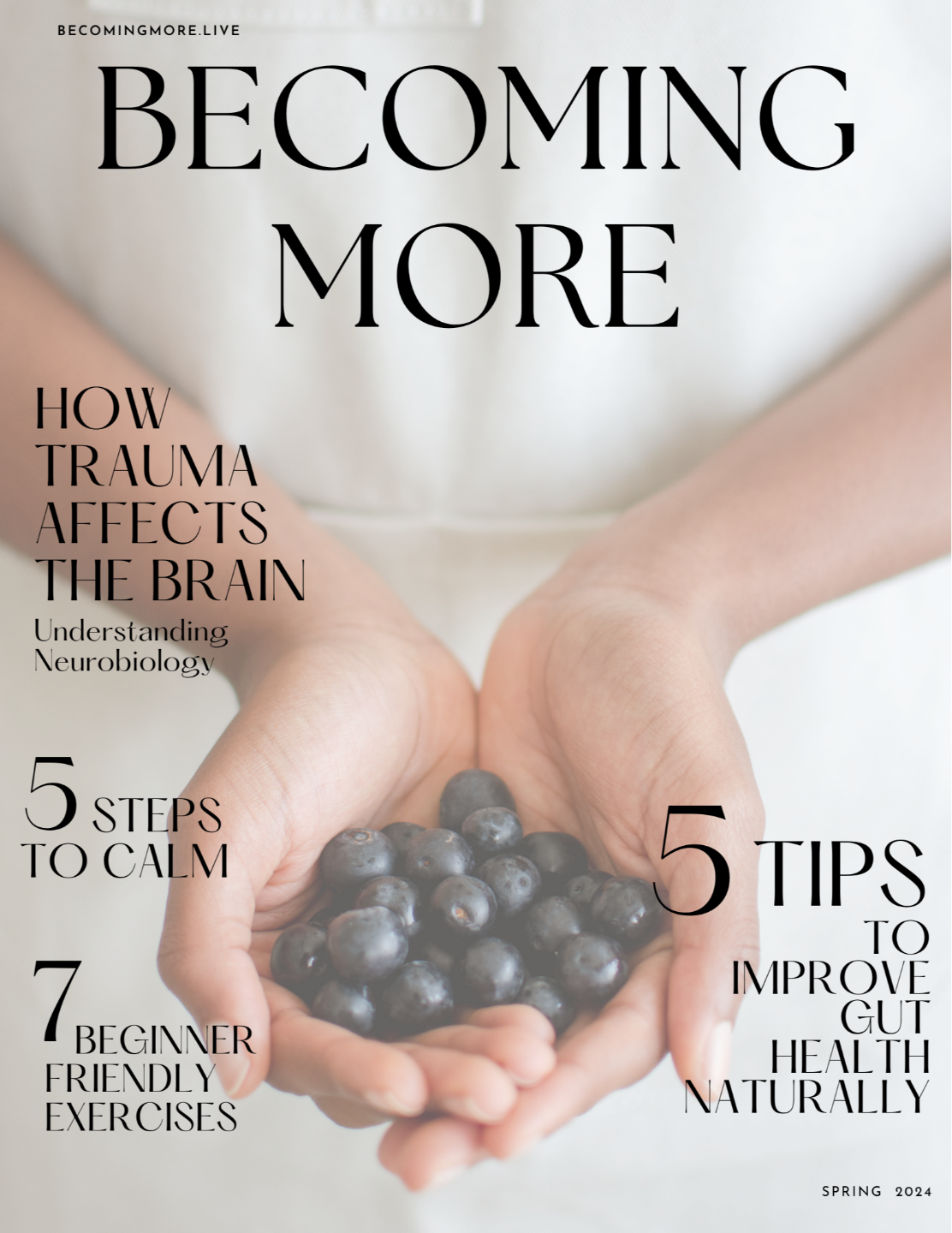
Stay connected with the Becoming More magazine!
Discover a world of inspiration and transformation with Becoming More Magazine! Unlock expert tips on personal growth, family enrichment, and life coaching.
We hate SPAM. We will never sell your information, for any reason.