You've asked the question. Maybe out loud, maybe only in your head. Maybe about a friend, a sister, a coworker — the one who seems smart, capable, strong, and yet she's still there. Still with him. Still making excuses. Still smiling when something behind her eyes says she stopped smiling a long time ago.
Why doesn't she just leave?
It's the question everyone asks. It's the question that keeps victims up at night, too — because they've asked it about themselves. And the answer is never simple. It's never one thing. It's a web, and by the time you realize you're caught in it, the threads are so tangled around your sense of self that you can't tell where the web ends and you begin.
In Passing Through Sorrow — Book 1 of the Fight for Freedom Series by Sarah K. Jensen — Bailey Simmons lives this question. She's married to Roy, a police detective. On paper, he's respectable. In public, he's controlled. Behind closed doors, he's something else entirely. And Bailey stays. For six years, she stays.
Not because she's weak. Not because she doesn't want to leave. Not because she doesn't know what's happening to her.
She stays because leaving is a war. And she hasn't found her army yet.
The Web You Don't See
Here's what most people don't understand about abusive marriages: the leaving isn't the hard part. The deciding to leave is the hard part. And the deciding takes years — sometimes decades — because the abuser has been systematically dismantling every exit route since day one.
Coercive control doesn't look like a punch on the first date. It looks like charm. It looks like attention. It looks like "I just want to spend all my time with you." It looks like "Your friends don't really understand you like I do." It looks like small, reasonable requests that slowly become rules. And by the time the rules become cages, you can't remember what life looked like without them.
Bailey's husband controlled her movements. Her contact with the outside world. Her access to money, to transportation, to the Bible. He allowed her one trip to Walmart. One new book a month. And those small permissions felt like gifts — because when everything is taken away, anything given back feels like mercy.
That's not weakness. That's survival. That's a woman learning to breathe inside a room with no windows and being grateful for the cracks of light that come through.
When the Abuser Is the System
Now add this: Roy is a police detective. He knows the system. He IS the system. Who does Bailey call? The police? They're his colleagues. His friends. The people who nod at him in the hallway and trust his judgment without question.
This is the reality for thousands of women. Their abuser isn't just a man — he's a man with authority. A man with connections. A man who knows how to make a phone call and make a problem disappear. Or make a person disappear.
When your abuser is the one people call for help, who do you call?
What Fiction Reveals That Statistics Can't
Statistics tell us that 1 in 4 women will experience severe physical violence from an intimate partner. That on average, a victim tries to leave seven times before succeeding. That the most dangerous time for a victim is the moment she leaves.
Statistics are true. But they don't make you feel the truth.
Fiction does.
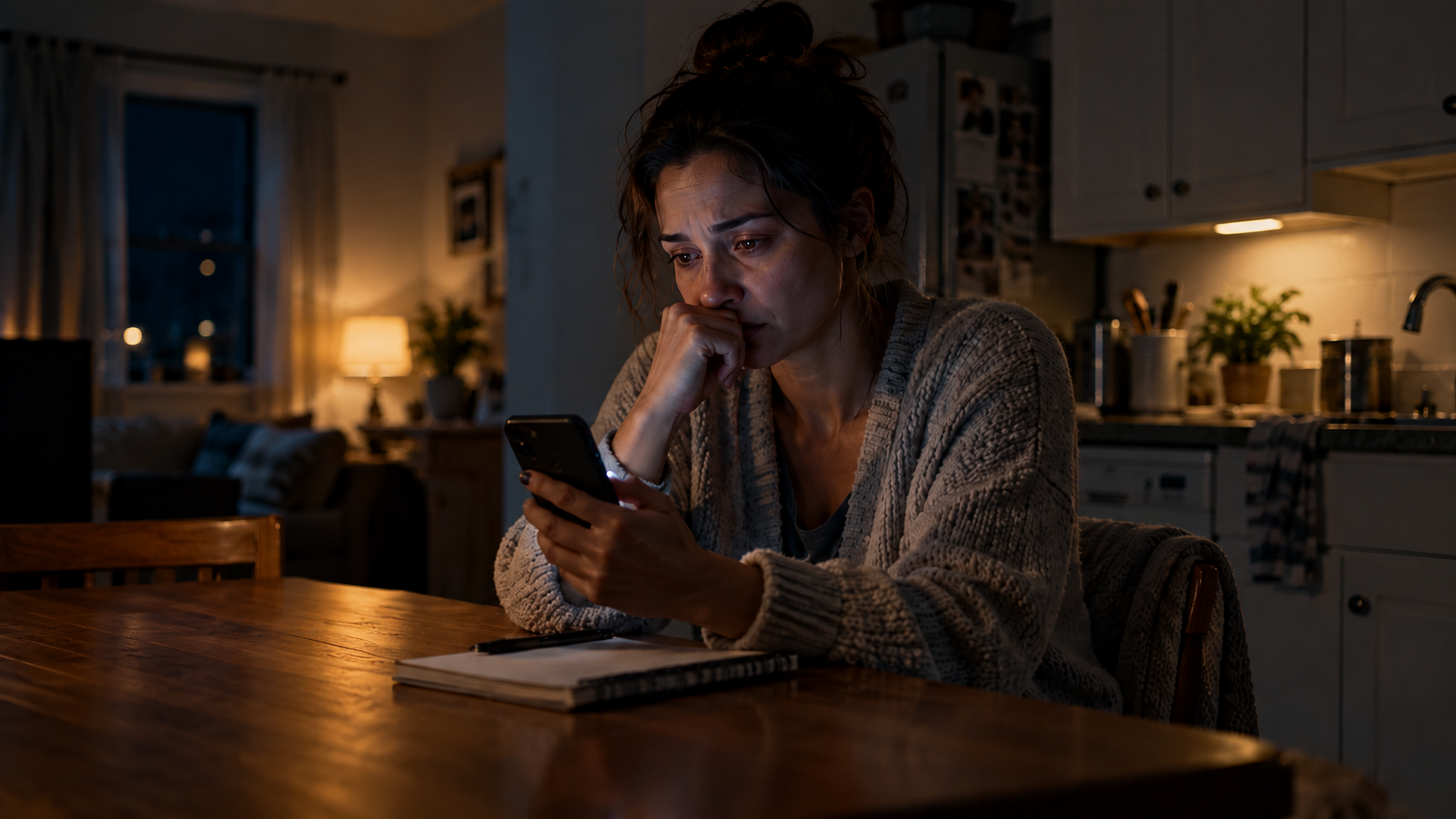
When you read about Bailey Simmons standing at her bedroom window, watching her neighbor Ana live a life she can't access — friends, freedom, laughter, a belly button ring catching the light — you don't just learn about isolation. You feel it. You feel the desperate longing for normalcy. You feel the way three years of watching through glass can wear a person down to almost nothing.
And when you read about the night Bailey finally reaches out for help — that small, whispered plea that changes everything — you feel what statistics can't convey: the terrifying, nauseating, heart-pounding courage it takes to reach out when every part of you has been trained to believe no one will come.
The Question That Changes Everything
So let's reframe the question. Instead of asking "why doesn't she just leave?" — a question that puts the burden on the victim and implies she's choosing to stay — ask this:
What would it take for her to leave?
What would it take? A neighbor who notices. A brother who answers. A stranger who shows up. A phone number she can call. A door that opens. A person who says, "I see you. And I'm not walking away."
Bailey found her army. Not all at once. Not easily. But she found it. And when she had just one person to help, she walked through that door.
If you're reading this and you're where Bailey was — trapped, isolated, unsure who to trust — you don't have to find your whole army today. You just have to find one person. One phone call. One door.
The National Domestic Violence Hotline is 1-800-799-7233. Text START to 88788. You don't have to be ready to leave. You just have to be ready to talk.
And if you're reading this and you know someone — the friend, the sister, the coworker who seems off — don't wait for her to ask for help. She may never ask. Not because she doesn't want it, but because she's been taught that wanting things is dangerous.
Be the neighbor who notices. Be the one who leaves the basket at the door. Be the one who says, "I'm here. Whenever you're ready."
Because the truth about why she stayed isn't that she wanted to. It's that she couldn't see a way out. And sometimes, the way out starts with someone else seeing it first.
Passing Through Sorrow — Book 1 of the Fight for Freedom Series by Sarah K. Jensen. Available now on Amazon. A portion of every purchase supports charities for abuse and trauma survivors, human trafficking victims, and veterans.
If you or someone you know is in danger, call the National Domestic Violence Hotline at 1-800-799-7233. Text START to 88788. You are not alone.
This is Post 1 of 6 in the "Why She Stayed" series. Next month: The Walmart Trip Was Her Freedom — What Isolation Really Looks Like in a Toxic Relationship.
Stay connected with the Becoming More magazine!
Discover a world of inspiration and transformation with Becoming More Magazine! Unlock expert tips on personal growth, family enrichment, and life coaching.
We hate SPAM. We will never sell your information, for any reason.