When Your Husband Is the Police: Why Some Women Can't Call for Help
Imagine knowing exactly who you're supposed to call for help—and being afraid that the person answering might already know your husband. Maybe they work together. Trust each other. And maybe your husband had spent years building a reputation as the dependable one. The calm one. The man who shows up when other people are in trouble.
And maybe no one who knows him professionally has ever seen the man you know at home. That distinction matters, because this isn't a post about police officers being the enemy. Most aren't. Many enter law enforcement because they want to protect people, serve their communities, and stand between vulnerable people and those who would hurt them.
But police officers are human beings. And human beings can be deceived. Some look at a respected colleague and see exactly what he wants them to see. At times they notice things that don't quite make sense but don't yet understand what they mean. Some might know more than they want to admit and choose loyalty to the wrong person. And then there are the ones who eventually take a closer look. That difference could change a woman's life.
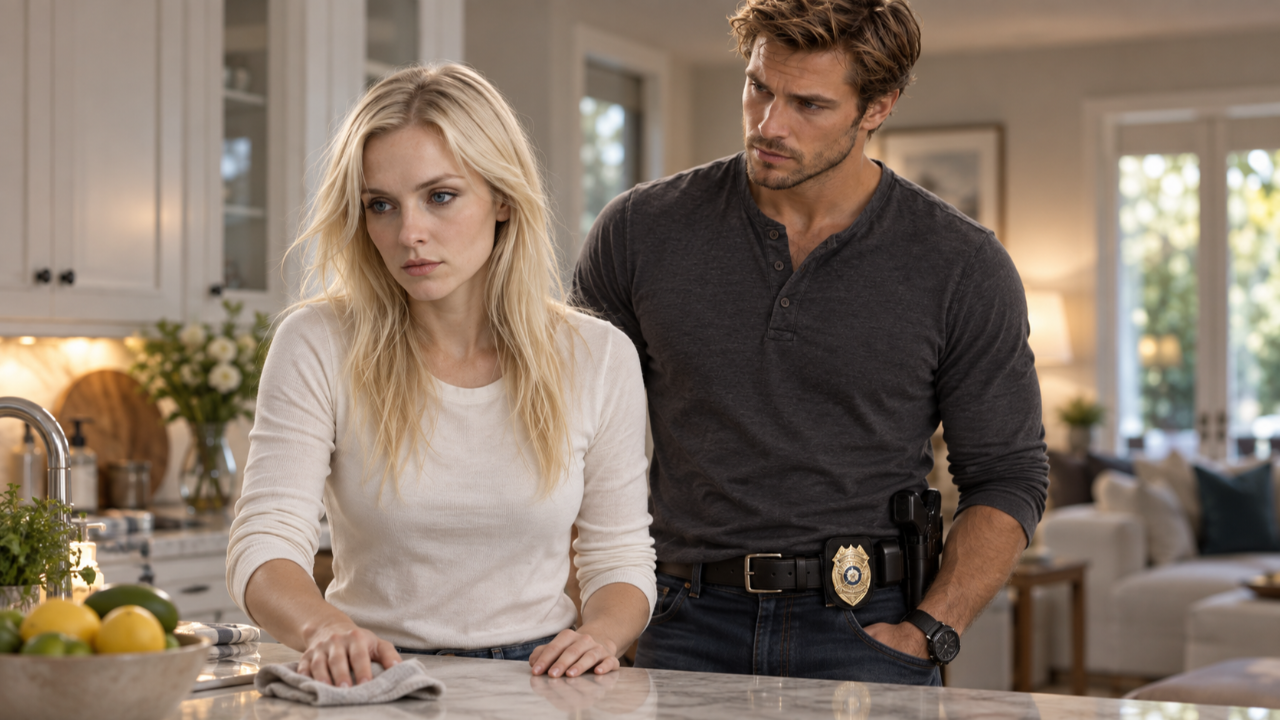
In my novel Passing Through Sorrow, Bailey Simmons is married to a police detective named Roy. That matters because Roy doesn't simply possess physical strength or emotional control. He has credibility to back him up. People know him. Some respect him. Even have reasons to believe him. And when the person hurting you is also someone other people trust to protect them, asking for help becomes far more complicated than simply picking up a phone.
When Everyone Knows a Different Man
One of the hardest things for families and friends to understand about abuse is that the abusive person they hear about might bear very little resemblance to the person they think they know. He might be funny at dinner. Helpful when someone's car breaks down. Patient with children. Professional at work. The first person to volunteer when somebody needs something.
That doesn't necessarily mean the woman describing something frightening at home is mistaken. It means the abuser understands something important: reputation matters. The more trustworthy he appears outside the home, the harder it becomes for someone inside the home to explain what's happening.
That problem can become even more complicated when his profession already carries authority. A badge doesn't make someone abusive. But when an abusive person happens to wear one, the authority attached to that badge can become another tool he uses.
The U.S. Department of Justice has specifically recognized the need for law-enforcement agencies to have policies addressing domestic violence committed by officers and to investigate allegations involving their own personnel. The International Association of Chiefs of Police has likewise published guidance for responding to officer-involved domestic violence. That matters because it makes an important distinction: no profession is immune from individual wrongdoing, and misconduct inside the profession has to be taken seriously.
The problem isn't the badge. The problem is what a corrupt man might try to hide behind it.
The People Who Didn't Know
Sometimes the people surrounding an abusive man truly don't know. Coworkers might have spent years beside him and never seen anything that resembled abuse. A supervisor might know him as reliable and controlled. Neighbors might see a husband mowing the lawn. A friend might hear him speak warmly about his wife. Someone can honestly believe he is a good man and still be wrong.
That doesn't automatically make them complicit. It makes them human.
Abuse often depends upon separation between public life and private life. The person committing it has every reason to protect that separation. And the woman experiencing it may have every reason to help him. She smiles. Covers for him. Makes excuses. Says she's tired. That everything is fine. Sometimes she even defends him.
To an outsider, those things can look like evidence that nothing terrible is happening. But if you understand abuse, they could be evidence that she's trying to survive the evening.
So when friends or family begin seeing small inconsistencies, the answer isn't necessarily to accuse those who spend the most time around the abuser of deliberately ignoring the truth. Sometimes the better question is: What haven't they seen yet?

The People Who Helped Him Hide It
There's another possibility, though, and it's harder to talk about. Sometimes someone does know. Maybe not everything. Possibly only enough to realize something's wrong. And they choose to protect the person causing harm.
They dismiss the woman. Repeat his version of events. Warn him that she spoke to someone. Make excuses because he's a friend, relative, coworker, leader, or someone whose reputation they don't want damaged. That choice matters. Loyalty stops being a virtue when it requires protecting wrongdoing.
Justice doesn't mean destroying someone over an accusation. It means refusing to decide that someone's position, uniform, profession, friendship, wealth, influence, or reputation automatically makes them incapable of doing harm.
It means being willing to look at evidence. To listen carefully. Ask another question. And protect the vulnerable while the truth is being determined. There's a profound difference between standing beside a good man who's been falsely accused and standing between an abusive man and accountability. Wisdom requires being willing to discover which one you're doing.
The People Who Finally See
Then there are the people who begin noticing. A change in her voice. The way she checks his face before answering a question. How often she cancels plans or how carefully she chooses her words. Maybe how completely different she seems when he enters the room.
Maybe she's become quieter and more isolated, or she no longer calls. Or she seems perpetually busy, constantly cleaning, working, moving—anything except sitting still long enough to think about what her life has become.
None of those things prove abuse by themselves, but they can become reasons to pay attention.
The National Domestic Violence Hotline advises friends and family not to pressure someone into disclosure or tell them what they must do. Instead, keeping communication open, listening without judgment, and asking how the person would like to be supported can help return some choice to someone whose choices may already be heavily controlled.
That kind of help rarely looks dramatic. It looks like:
-
continuing to invite her even after she declines repeatedly
-
finding a private moment to ask whether she's okay
-
listening instead of interrogating
-
believing there might be more to the story than you can see
-
asking, “How can I help?” instead of announcing what she needs to do
-
remaining trustworthy when she isn't ready to talk
Sometimes the person who eventually helps isn't the one who storms through the door, but the one who quietly keeps the door open.
When Calling for Help Feels Dangerous
For a woman whose abusive partner works in law enforcement—or holds another position of significant authority—the fear can become unusually complicated. She might worry that people know him and would tell him if she reports his actions. She may fear his professional reputation will outweigh her words.
Those fears don't prove that every officer around him would protect him. But the fears themselves may still be very real, and those fears can keep her silent. That's one reason individualized safety planning matters.
The National Domestic Violence Hotline includes a specific safety-planning path for people who are themselves in law enforcement or whose partners are. Its advocates can also provide confidential support, safety planning, information, and connections to local resources.
If a woman fears ordinary channels are not safe for her, she doesn't have to solve the entire situation in one day. She can begin with one trustworthy person. An advocate. A relative who's not connected to her partner. A friend who can listen without immediately taking over. One person outside the circle of influence she fears.
Sometimes safety begins much smaller than escape; it begins with finally being believed.
If You Suspect Someone You Love Is Living This
This part matters to me almost more than anything else in the story because most people reading this aren't going to be married to a police officer who abuses them. But one of you may wonder about someone you love—a daughter, a sister, a friend, a coworker, a neighbor.
Maybe something simply feels wrong. You don't need to launch an investigation or confront her husband. Nor do you need to force her to admit anything. In fact, pushing too hard could cause her to retreat. The Hotline specifically recommends respecting the survivor's decisions and avoiding pressure to disclose or leave before she feels ready.
Start much smaller. You might say, “I've noticed you haven't seemed like yourself lately. I'm not asking you to explain anything. I just want you to know I'm here.” Or, “If you ever need somewhere to go, you can call me.” Maybe even, “You don't have to answer this now. I just want to make sure you're okay.”
But you have to mean it. Not only if she leaves tomorrow or follows your advice. Not only if she tells you everything. You stay trustworthy.
Because an abusive person may spend years teaching someone that reaching out is dangerous. You can spend those same years teaching her that reaching toward you isn't.
Why I Made Roy a Police Detective
I didn't make Roy a detective because I believe police officers are dangerous. I made him one because Roy is dangerous. There's a difference.
His profession gave him something an ordinary abusive man might not possess in exactly the same way: authority, credibility, knowledge of systems, and relationships with people accustomed to trusting his judgment. What he chooses to do with those things belongs to him.
The badge isn't evil. Roy is responsible for Roy. And that distinction means something powerful. Each of us is accountable for how we treat others, no matter what authority we may hold.
There are good, honorable officers all over the world. Officers who take domestic violence seriously and would risk friendships, reputations, and professional relationships to protect those being harmed.
There are also people in every profession who fail to protect. Some because they were deceived. Others because they were afraid. Still others because loyalty became more important to them than truth. And some because they chose wrong.
The question isn't whether we can trust the police. The deeper question is whether we love truth enough to follow it even when the person doing wrong is someone we respect.
Someone Has to Notice
Bailey's story remains Bailey's story, and I'm not going to tell you here how she found her way through it. That belongs in the book. But the question underneath her story belongs to all of us.
What happens when the person who needs help is afraid of the very system designed to provide it?
The answer may begin with better systems. With a courageous officer who refuses to protect wrongdoing. Or a supervisor who takes a complaint seriously. Sometimes it begins with family. With a friend. Or the person next door who notices something isn't right and quietly makes herself available.
We don't have to assume the worst about every husband with a badge or every officer who works beside him. But neither should we assume that a uniform, position, title, or good reputation makes wrongdoing impossible.
Justice requires enough courage to look. Mercy requires enough patience to listen. And love requires enough wisdom to know that sometimes the person who says, “I'm fine,” is hoping someone will notice she isn't.
If you or someone you love is experiencing domestic violence, the National Domestic Violence Hotline offers confidential support, safety planning, and connections to resources. Call 1-800-799-SAFE (7233), text START to 88788, or use their online chat. The Hotline also offers safety-planning guidance specifically for people whose partners work in law enforcement.
And if you're the friend, sister, parent, coworker, neighbor—or officer—who begins to see something that doesn't add up, don't look away simply because the person causing harm seems respectable. You may not know the whole story yet, but you can become a safe place for the truth to finally be told.
Stay connected with the Becoming More magazine!
Discover a world of inspiration and transformation with Becoming More Magazine! Unlock expert tips on personal growth, family enrichment, and life coaching.
We hate SPAM. We will never sell your information, for any reason.