You did it. You got out. The bags are packed, the door is behind you, and for the first time in years, you are somewhere he cannot reach.
So why do you feel worse?
This is the part of the escape story nobody writes. The montage in the movies ends with the woman walking out the door, wind in her hair, free at last. The credits roll before the first night in a house that isn't yours, before you flinch at the sound of a car door, before you reach for a phone to ask permission for something and remember there's no one to ask anymore.
In Passing Through Sorrow by Sarah K. Jensen, Bailey Simmons gets out. But the book doesn't end there — because that's not where the story ends for any woman. What comes after the escape is a longer, quieter, harder road: the road back to herself.
The Cage Doesn't Disappear When the Door Opens
Here's what survivor after survivor will tell you: the relationship ends, but the conditioning doesn't. Not right away. You still move through the world like a woman being watched. You still rehearse conversations before you have them. You still scan every room for exits and every face for threat. You catch yourself apologizing for things no one blames you for. You wait for the backlash that follows every independent decision — and when it doesn't come, you don't feel relieved. You feel off balance, like a step that should have landed on solid ground and found only air.
Roy spent six years training Bailey to be small. Six years of punishments and rewards, of isolation and intermittent tenderness, of rules she never asked for and consequences she never deserved. That training doesn't wash off at the property line. It fades — but it fades slowly, unevenly, in the smallest moments: the first time she chooses what to cook without fear. The first time she answers a question without rehearsing the safe answer first. The first time someone asks her opinion and she realizes she actually has one.
Six years of abuse took her identity piece by piece. Getting it back takes piece by piece too.
The People Who Put You Back Together
Bailey's road back runs through people. A neighbor who saw her and kept showing up. A brother who came home. A grandmother who taught her that the breathing that steadied her lungs was never just about lungs — it was about giving the panic to God, one breath at a time. A protector who was patient when she couldn't be touched, steady when she couldn't be steady, present when presence itself felt dangerous.
If you're on this road, I want you to notice something: nobody in that list fixed her. No one swooped in and made her whole. They simply stood at a distance she could survive and refused to leave. That's most of what healing from an abusive relationship actually looks like — a woman relearning who she is, surrounded by people who never rush her.
If you're the friend, the sister, the neighbor, the coworker of a woman who just got out: this is your job. Not to fix. Not to push. Not to ask why she stayed or why it took so long. To be the safe place she can orbit back to while she finds her own gravity again.
What She Rebuilds, Piece by Piece
The road back has landmarks. Small ones. Things that look like nothing from the outside and feel like everything from inside:
The first decision. Not "should I leave" — that decision is made. The first ordinary decision. What to eat. When to sleep. Which aisle of the grocery store to walk down first. When every choice used to be surveilled, your own choices feel suspicious. Making them anyway is how you remember you're allowed to.
The first no. Small. Quiet. To a waitress, a coworker, a stranger at the door. Your heart pounds like you've broken a law, because in the old world, you had. In this world, "no" is just a word. Saying it anyway is practice.
The first unguarded laugh. You'll hear it come out of your own mouth and be startled by it. You'll think of how long it's been. You'll laugh again the next time a little sooner.
The first prayer. If your faith was used against you — twisted into a cage, used to keep you in line, taken from you entirely — then the road back includes God, and it's a complicated stretch of road. Bailey's Bible was taken from her. Her prayers stopped. For her, part of coming back to herself was coming back to a God who had been waiting the whole time — not with a list of what she'd done wrong, but with open hands.
Whatever was stolen from you — your money, your friendships, your confidence, your faith — the road back is the same road, and it's walked one piece at a time.
The Setbacks Aren't What They Look Like
You will miss him. Not the abuser — the person he pretended to be, in the good hours, on the good days. That person never existed. But grief doesn't know that, and you'll grieve him anyway. This doesn't mean you made a mistake. It means you loved someone who wasn't safe to love. Those are compatible sorrows.
You'll be triggered in ordinary places and angry at yourself for it. You'll drive past the old house. You'll hear a voice like his in a store. Your body will remember what your mind has already settled. None of this is going backwards. This is what healing from abuse actually looks like — two steps forward, one step sideways, forward again.
And if you go back — as many women do, more than once — you are not a failure and you are not alone. The hotline doesn't stop taking your calls because you've called before. Neither should anyone else.
Who You Are on the Other Side
Here is what I know about the women who walk this road, in fiction and in life: they come out the other side quieter about some things and louder about others. They know exactly what they're made of, because they've been tested in ways no one should be tested. They're gentle with other people's fear, because they know what fear is for. They're the ones who notice the neighbor who never comes outside. They're the ones who leave the basket at the door.
Bailey Simmons walked out of that house with almost nothing. The woman she becomes has something money never bought and abuse never managed to take — she knows who she is. Not because the road back was short. Because she walked every mile of it.
If you're on that road right now, at the beginning where everything is air and no ground: keep walking. Find your people and let them stand there while you find your gravity. Breathe. Pray if you can. Eat something you chose. Say one small no. And when the setbacks come — they will — come back to this truth: he was the lie. You are the real thing.
A Word to the Ones Still Inside
If you're reading this from inside the house you're afraid to leave — this series is for you. Every word of it. Start with the hotline. The National Domestic Violence Hotline is 1-800-799-7233. Text START to 88788. One call. You don't have to be ready. You just have to dial.
The road back to yourself is long. But it's a road, which means it goes somewhere. The house you're in doesn't go anywhere except deeper.
Come back. We'll be here.
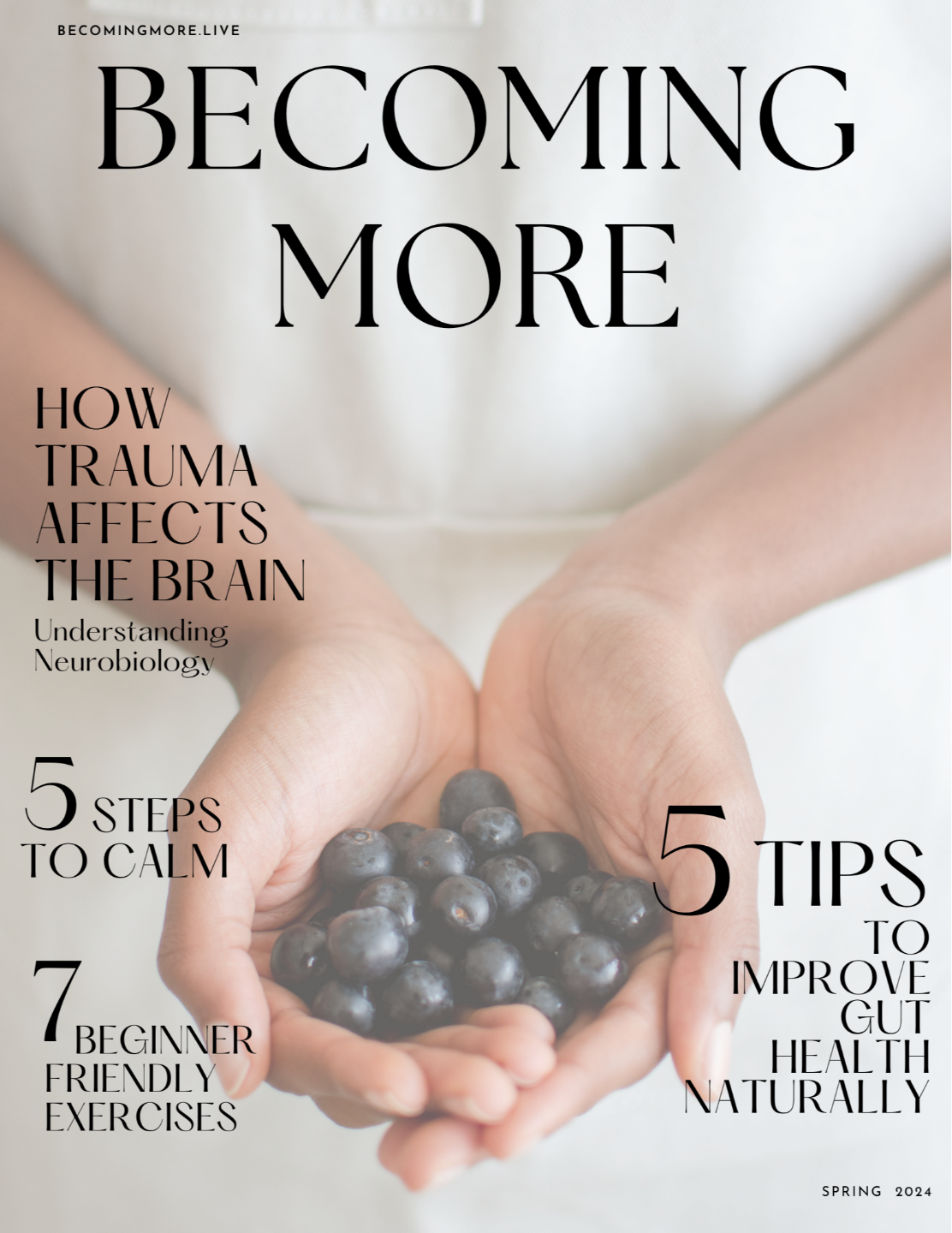
Stay connected with the Becoming More magazine!
Discover a world of inspiration and transformation with Becoming More Magazine! Unlock expert tips on personal growth, family enrichment, and life coaching.
We hate SPAM. We will never sell your information, for any reason.