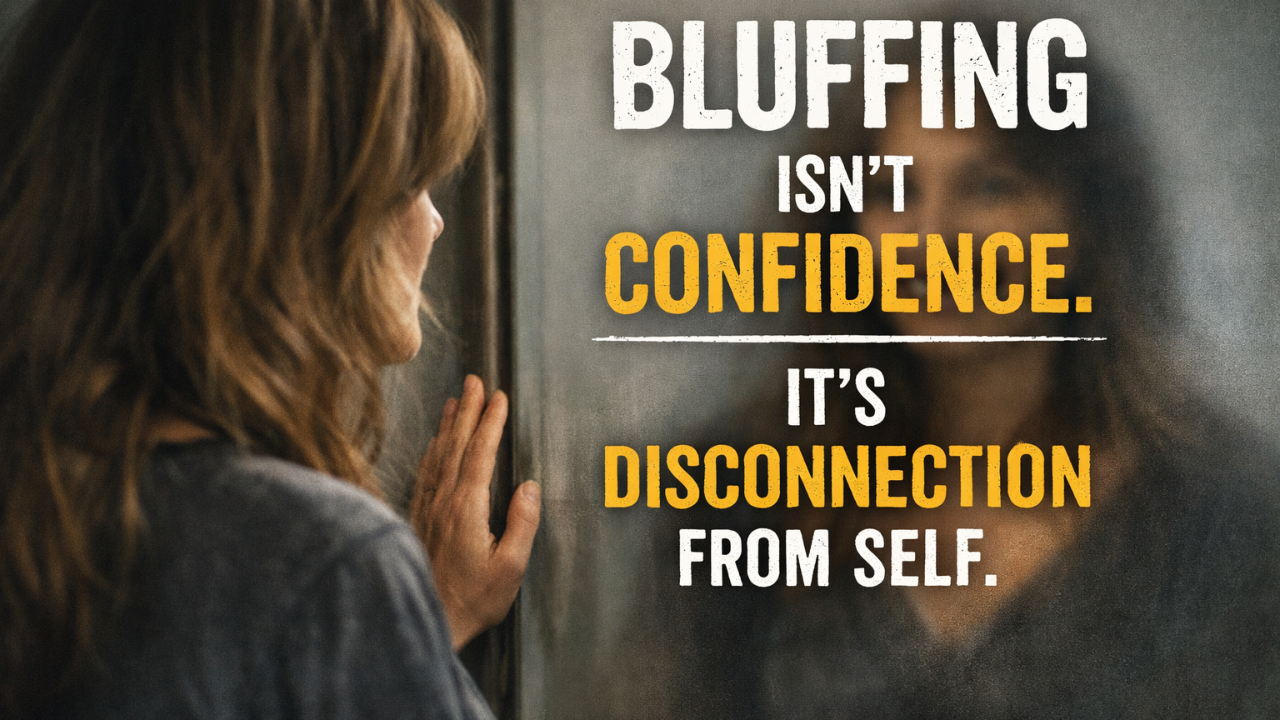
Bluffing Isn’t Confidence—It’s Disconnection From Self
Bluffing often looked harmless.
A nod here.
A polite smile there.
A quiet “I’ve got this” when the truth is, I don’t.

In a TEDx talk titled How to Communicate Better with Hearing Loss, Gael Hannan named something many of us do far more often than we realize.
“I had bluffed. I had faked it, which is pretending you understand when you don’t.”
She was speaking about hearing loss—but her insight reached far beyond communication challenges.
Because bluffing isn’t limited to sound.
We bluff when we pretend we understand expectations that don’t make sense to us.
We bluff when we say we’ve “moved on” but haven’t processed what hurt us.
We bluff when we perform growth instead of allowing it to take root.
And often, we do it to survive.
Gael named it plainly:
“Bluffing is more than just a random slip up. It is a survival tactic with consequences.”
That line stuck with me because survival tactics are not moral failures. They are adaptations. They once protected us. But when we keep using them long after their purpose has passed, they begin to cost us.
“My biggest communication barrier was me.”
That realization marked a turning point in her story. And it echoed a truth many people quietly carry:
When we bluff our way through life, we slowly disconnect from ourselves.
We stop trusting our own awareness.
We stop naming what we need.
We stop honoring where we actually are.
Bluffing convinces others we’re fine—but it teaches us to disappear.
True confidence doesn’t come from looking capable.
It comes from being honest enough to say:
-
“I don’t understand this yet.”
-
“I need more time.”
-
“This doesn’t feel aligned for me.”
-
“I’m not ready to say yes.”
Gael eventually made what she called a no-bluff pledge:
“I will not pretend to understand when I do not.”
That wasn’t weakness.
That was self-respect.
Confidence isn’t loud.
It isn’t performative.
It doesn’t require perfection or certainty.
Confidence is presence.
It’s staying connected to yourself even when it feels uncomfortable.
It’s choosing truth over approval.
It’s allowing real change instead of rushing to appear changed.
If you’ve been feeling stuck, exhausted, or quietly disconnected, it may not be because you’re failing.
It may be because you’ve been bluffing your way through something your heart has been asking you to face honestly.
And honesty—especially with yourself—is where Becoming More truly begins.
Because bluffing might keep the peace for a moment.
But self-trust is what builds a life you can actually stand inside.
If you found this post helpful, please comment below and share it with a friend.
Stay connected with the Becoming More magazine!
Discover a world of inspiration and transformation with Becoming More Magazine! Unlock expert tips on personal growth, family enrichment, and life coaching.
We hate SPAM. We will never sell your information, for any reason.