Spiritual resilience is often misunderstood because it can look similar to things it is not. From the outside, someone steady under pressure can be mistaken for someone who appears unaffected. A person who continues moving forward is often assumed to be unbothered. And those who hold to faith can be seen as avoiding reality.
But spiritual resilience is not denial.
Pain is not ignored. Nor are circumstances treated as easier than they are. Fear, grief, and uncertainty are not dismissed. Each is acknowledged in full, but none are allowed to determine the direction.
Christ taught, “In the world ye shall have tribulation: but be of good cheer; I have overcome the world” (John 16:33, KJV). He did not deny the presence of difficulty. He named it directly. But He also established something greater than it.
That is where resilience begins.
Likewise, Spiritual resilience is not avoidance.

Every season presents a decision point. One direction delays, avoids, and waits for circumstances to improve. The other requires movement. Spiritual resilience is choosing the path that moves forward, even when clarity is incomplete.
Avoidance steps away from what is required. It delays decisions, ignores responsibility, and often disguises itself as patience or surrender. And it can sound like faith, while lacking movement.
Resilience, on the other hand, remains engaged.
What is in front of you is faced directly, even when it is uncomfortable. Forward movement continues, even when clarity is incomplete. Obedience is chosen over ease, and responsibility over retreat.
The Book of Mormon teaches, “Press forward with a steadfastness in Christ, having a perfect brightness of hope” (2 Nephi 31:20). That kind of forward movement does not come from avoidance. It comes from anchored trust.
Spiritual resilience is not passive faith.
Passive faith waits without preparing and hopes without acting. When you place responsibility entirely outside of yourself, you are waiting to be acted upon. “…men are free… to act for themselves and not to be acted upon…” (2 Nephi 2:26). However, faith, as taught in scripture, has always required participation. “Be not overcome of evil, but overcome evil with good,” (Romans 12:21, KJV). These scriptures show that spiritual resilience is about choosing your response instead of being carried by emotion, fear, or circumstance.
The Apostle James wrote, “Faith without works is dead” (James 2:26, KJV). Faith is not simply something you hold. It is something you live.
“The Lord loves effort, because effort brings rewards that can’t come without it.”
— Russell M. Nelson
This principle applies directly to spiritual resilience.
Faith is not proven in stillness alone. Strength develops through consistent, intentional action. Growth is built as you choose to seek God before reacting, act with integrity when it would be easier not to, and continue forward even when the outcome is not yet visible.
Spiritual resilience lives in that space between what you feel and what you choose.
Emotion is allowed to exist, but it does not take the lead. A pause forms between pressure and response, creating space for clarity before action. In that space, truth becomes the guide, even when everything around you feels uncertain.
“By small and simple things are great things brought to pass” (Alma 37:6). Resilience is built the same way. Not in a single moment, but in repeated decisions to remain anchored.
This is what spiritual resilience actually is.
It is the ability to remain grounded when circumstances are unstable. It is choosing clarity over reaction, truth over fear, and forward movement over avoidance. It is trust expressed through how you think, how you decide, and how you act.
Being steady does not mean you are unaffected.
It means you are not controlled.
And that distinction changes everything.
If you are strengthening your ability to respond instead of react, to remain grounded instead of overwhelmed, and to build confidence that holds under pressure, this is the work that supports it.
Spiritual resilience is not something you either have or do not have.
It is something you build, one decision at a time.
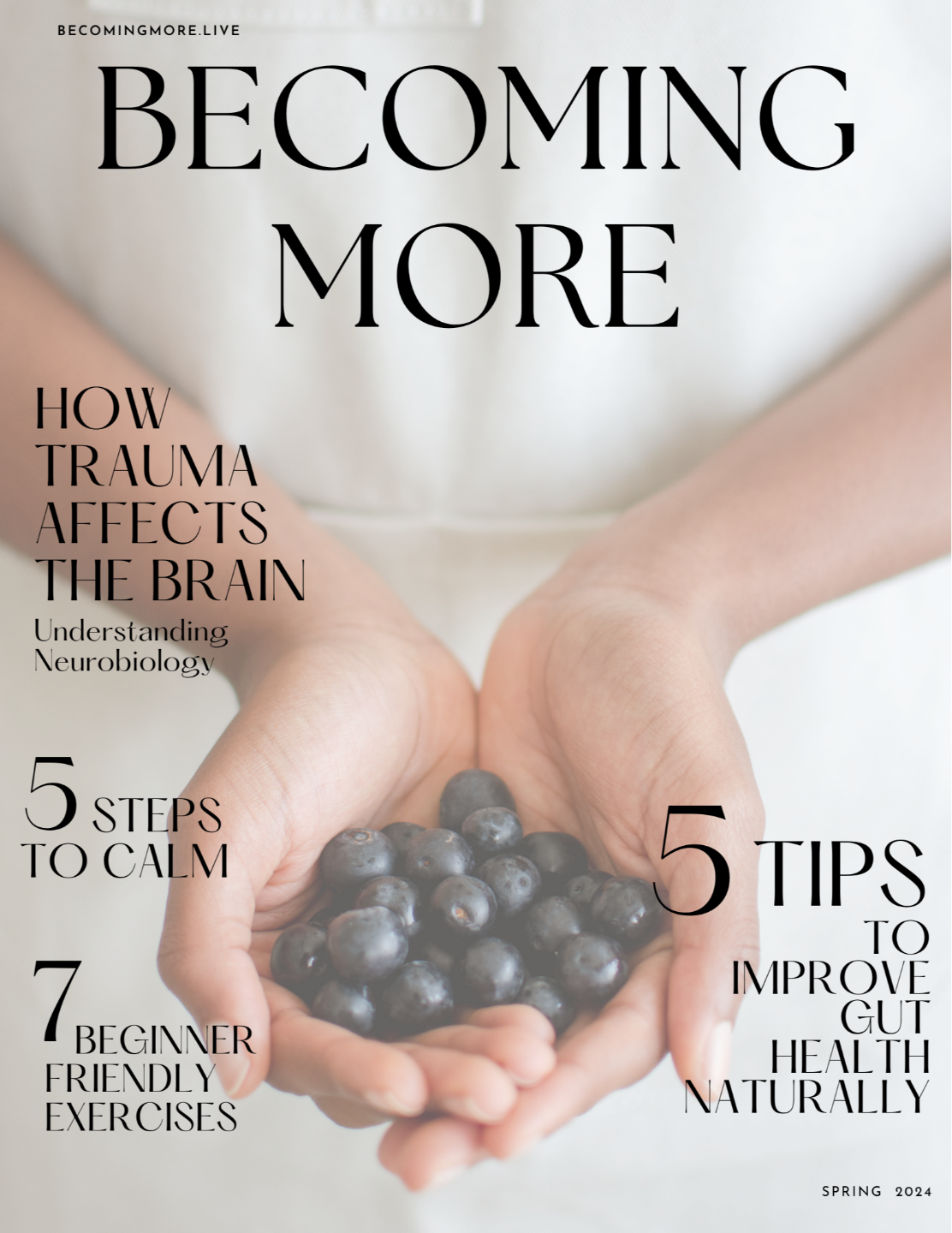
Stay connected with the Becoming More magazine!
Discover a world of inspiration and transformation with Becoming More Magazine! Unlock expert tips on personal growth, family enrichment, and life coaching.
We hate SPAM. We will never sell your information, for any reason.