There are seasons when life feels unsteady. Circumstances shift, clarity weakens, and decisions carry more weight than they used to. In those moments, what matters most is not control over outcomes, but what anchors you within them.
Spiritual resilience becomes necessary in those seasons.
Not as an idea, but as a foundation that holds when everything else feels less certain. It is not about pretending things are easier than they are. It is not about suppressing emotion or forcing confidence. It is about learning how to remain grounded when life does not offer you stability.
“Which hope we have as an anchor of the soul, both sure and stedfast”
(Hebrews 6:19, KJV).
An anchor does not remove movement around it. It holds position within it. That distinction matters, because faith was never meant to eliminate pressure. It was meant to steady you within it.
This series is built on that truth.
Spiritual resilience is not about avoiding difficulty. It is about developing the ability to stand firm without becoming reactive, overwhelmed, or disconnected from what is true.

At the surface, the water is restless. Waves rise and fall, and those in the boat can feel every shift, every pull, every moment of instability. But below, where the anchor is set, the water is steadier. The movement still exists, but it is not as chaotic. That is what anchoring does. It does not remove the storm above, but it creates stability beneath it. Without an anchor, the boat would be carried wherever the current takes it, tossed and redirected by forces it cannot control. In the same way, when you are not anchored in truth, you are more easily pulled by fear, emotion, and uncertainty. But when you are anchored, even in the middle of movement, you are not lost to it.
Most people do not lose their way because they lack belief. They lose it because emotion begins to lead. When pressure increases, it becomes easier to react than to discern, to rush than to remain steady, and easier to follow what feels immediate than what is true.
Spiritual resilience interrupts that pattern.
It teaches you to pause before responding, to examine what fear is suggesting, and to return to truth before making decisions. It allows emotion to exist without allowing it to take control. It replaces reaction with intention.
This kind of steadiness is not automatic.
It is built through consistent choices. Choosing to seek God before reacting. Choosing to remain grounded when answers are incomplete. Choosing to move forward without demanding immediate clarity. Over time, those choices create strength that is not dependent on circumstance.
And that strength carries into every area of life.
It affects how you think, how you lead, and even how you respond under pressure. It strengthens your ability to make decisions without being driven by urgency or fear. It creates consistency, even when life itself is inconsistent. It does not replace growth in other areas, but it supports it by giving you something steady to build on.
This is not only for moments of visible crisis.
It is for the woman navigating change she did not plan, the leader carrying responsibility without recognition, and the person rebuilding after loss, betrayal, or disappointment. It is also for those who sense that their faith has remained surface-level and are ready for it to become something that steadies them in real time.
Faith was never meant to remain theoretical. It was meant to hold under pressure.
That is what this series will help you develop.
The Series Framework
- What Spiritual Resilience Actually Means (And What It Isn’t) - A clear foundation that separates resilience from denial, avoidance, and passive faith.
- The Difference Between Faith and Avoidance - How to recognize when trust in God is active and when it has shifted into disengagement.
- Regulating Emotion Without Disconnecting From God - Learning how to process emotion without allowing it to lead or disrupt clarity.
- Standing Firm When Outcomes Are Uncertain - Making decisions and continuing forward movement without full visibility.
- Identity That Doesn’t Collapse Under Pressure - Building identity on truth instead of circumstance, approval, or outcome.
- When You Feel Spiritually Tired - Recognizing internal fatigue and restoring strength without withdrawing or hardening.
- Living Anchored Instead of Anxious - What it looks like to move through life with steadiness, clarity, and grounded faith.
Each part builds on the last, not to overwhelm you, but to strengthen you. This is not information to collect. It is the capacity to develop.
Spiritual resilience is built when you choose to remain anchored instead of reactive, when you act with clarity instead of urgency, and when you continue forward without requiring everything to be resolved first.
Life will not always feel steady.
But you can learn how to be.
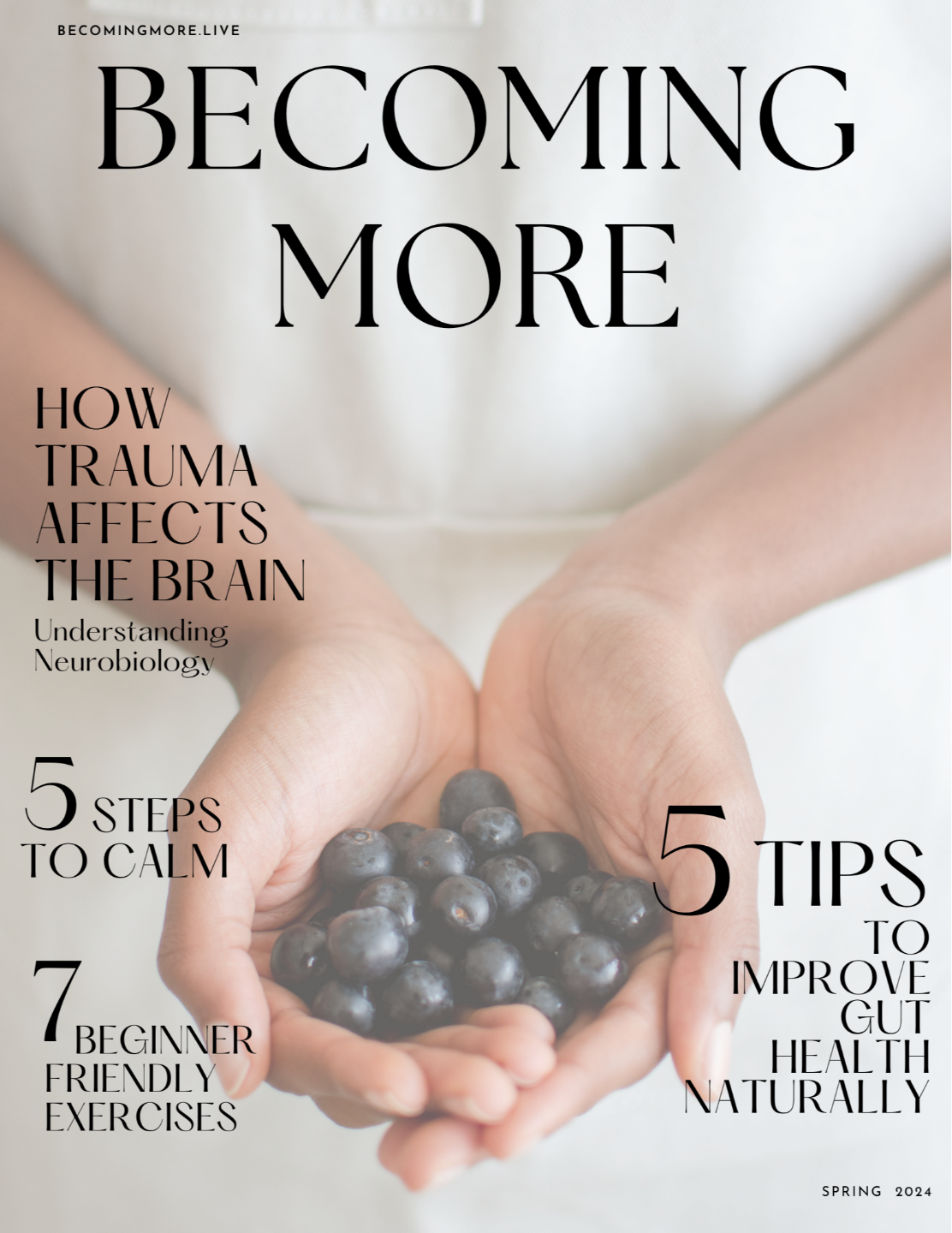
Stay connected with the Becoming More magazine!
Discover a world of inspiration and transformation with Becoming More Magazine! Unlock expert tips on personal growth, family enrichment, and life coaching.
We hate SPAM. We will never sell your information, for any reason.